

Cloud kitchens are rapidly reshaping customer preferences, gradually shifting them from traditional fine dining toward delivery-first models. But, while great food and quick service are important for gaining repeat customers, good quality packaging ensures the food reaches in a safe and intact condition.
However, when choosing the right packaging for cloud kitchen orders, most businesses only consider the operational functionality of the package and overlook important factors like temperature maintenance, leakage prevention, sustainability goals, brand perception, and customer satisfaction, etc. These factors play an equally important role in fulfilling customer expectations, revenue goals, and environmental responsibilities.
This guide breaks down everything that you should know about food packaging supplies for your cloud kitchen order. From plastic takeaway containers, bagesse boxes, cardboard boxes, to biodegradable boxes, you will explore each food packaging type in detail.
What is Food Packaging for Cloud Kitchens?
Food packaging for cloud kitchens includes using different types of containers and materials to pack, store, and deliver food safely to the customers. As cloud kitchens run entirely on a delivery model, food packaging plays an important part in their services. The food packaging should be able to withstand the transportation challenges while maintaining hygiene, food quality, and a memorable unboxing experience.
Why Choosing the Right Packaging Matters?
It takes more than simply delectable food to stand out in the cutthroat food sector of today. Attracting consumers, improving their experience, and building brand loyalty all depend heavily on distinctive food packaging. The correct packaging:
- Preserves Food: Stops spills, leaks, and damage while in transit.
- Preserves Quality: Retains freshness, texture, and heat until delivery.
- Enhances the Client Experience: Neat, safe packaging enhances the client experience and increases repeat business and trust.
- Facilitates Efficient Operations: Simple packaging accelerates workflow in the kitchen and facilitates efficient operations.
- Minimises Losses: Less food waste, refunds, and complaints.
Beyond taste, attractive packaging creates a lasting impression for your customers, turning them into repeat clients.
Types of Food Packaging for Cloud Kitchens
With the development of cloud kitchens and online meal delivery, packaging has become more important than ever. Hence, choosing the correct packaging for your menu and delivery is important. Here are some of the most common food packaging options for cloud kitchens:
#1 Bagasse containers made of sugarcane fibre

Bagasse Food Containers
Buy durable and eco-conscious bagasse containers made from sugarcane fibre. Ideal for cloud kitchens serving hot and semi-dry meals while maintaining quality and presentation during delivery.
Buy NowThe bagasse containers are a popular, environmentally conscious choice, particularly for brands attempting to use less plastic. It works well with meals that don't contain a lot of liquid.
Pros:
- Composed of natural waste materials.
- For semi-dry foods, it maintains shape effectively.
- Ideal for mild heat.
- Positive eco-friendly brand perception.
Cons:
- It can eventually absorb moisture or oil.
- Unsuitable for runny gravies.
- Slightly more expensive than regular plastic.
- Short shelf life in humid storage.
#2 Microwavable Plastic containers (PP)

Microwavable Plastic Containers
Shop high-quality microwavable plastic containers designed for reheating and food storage. Perfect for takeaway, meal prep, and delivery, these containers ensure convenience, durability, and leak resistance.
Buy NowCloud kitchens, especially busy ones, most widely utilise microwavable plastic containers (PP). However, ensuring safe plastic containers that do not seep into the food while heating is an important requirement.
Pros:
- Robust and impervious to leaks.
- Perfect for gravy and spicy foods.
- Space-efficient and stackable.
- Economical for large-scale usage.
Cons:
- Unfriendly to the environment.
- Every plastic container might be microwave safe.
- It may seem simple or low-end.
- Keeps its smell if used again.
- It is under growing regulatory pressure.
#3 Cardboard containers

Cardboard Food Containers
Buy strong and practical cardboard food containers suitable for takeaway and delivery. Ideal for hot and cold meals, these containers help maintain food quality while offering a reliable packaging solution.
Buy NowCardboard containers are a favourite for dry foods and things that require room to breathe. People frequently use cardboard boxes for storing bakery food items, munchies, and pizza.
Pros:
- Easy to store and lightweight
- Recyclable and extensively used
- Adaptable for branding
- Suitable for crisp, dry foods
Cons:
- Weak against oil and moisture.
- A coating is required for durability.
- Unsuitable for large dinners.
- A lengthy delivery can disorganise the food.
#4 Aluminium/ Foil Containers

Aluminium Foil Containers
Shop durable aluminium foil containers with lids, perfect for baking, storing, and takeaway meals. These heat-resistant containers are ideal for oven use and help retain food freshness during transport.
Buy NowFoil or aluminium containers are perfect for foods that require a lot of heat and must remain warm for a longer period of time. People often use these containers for baked or grilled foods.
Pros:
- Outstanding heat retention.
- Adept at handling heavy and greasy foods.
- Doesn't leak easily.
- Keeps meals at a consistent temperature while in transit.
Cons:
- Not safe for the microwave.
- Bendable when under pressure.
- Perception of being less environmentally friendly.
- Minimal aesthetic appeal.
#5 Biodegradable containers
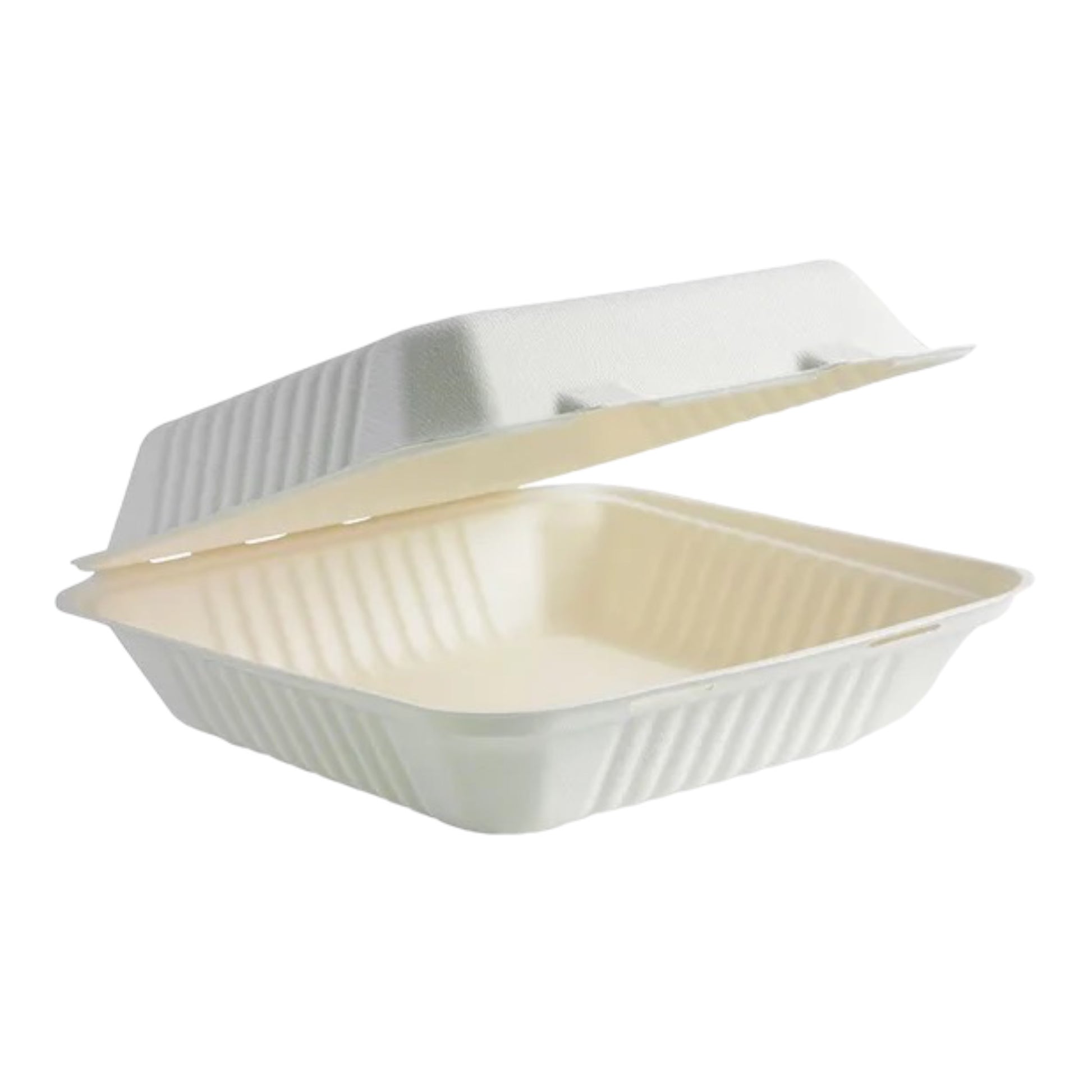
Biodegradable Food Containers
Buy biodegradable food containers made from natural materials, ideal for takeaway and delivery. These containers are suitable for hot and cold meals while supporting sustainable food packaging choices.
Buy NowThe biodegradable food packaging options are becoming popular with eco-conscious brands, mostly for sustainability objectives.
Pros:
- Decomposes more readily than plastic.
- Improved reputation of the brand.
- Clean and lightweight.
- Ideal for light meals.
Cons:
- Reduced ability to withstand heat.
- Can become smelly after storing hot or greasy food.
- More costly than typical choices.
- Needs proper decomposing.
How to Choose the Right Packaging
Type of Food
Different food types require different food packaging. Liquid food requires leak-proof packaging for which plastic containers are idea. Similarly, greasy food items such as fries, nuggets, etc., need ventilated packaging options, for which cardboard boxes or aluminium foil containers are best.
Delivery Time
Cloud kitchens also need to deliver food for longer distances, which increases the risk of spills, moisture buildup, or disorganised food items. For lengthy deliveries, food packaging containers like leak-proof microwavable containers and insulated foil containers are ideal.
Sustainability Goals
Consumers today are conscious of environmental responsibilities and are increasingly investing in brands that define sustainability. Cloud kitchen can invest in bagasse containers or biodegradable takeaway containers to achieve sustainability goals and build customer trust.
Budget
Most cloud kitchens run from small homes or shops that often look for cost-effective solutions for food packaging and delivery. However, choosing low-quality plastic containers or thin sheet aluminium containers can increase safety concerns and increased chanes of warping, respectively.
Therefore, to achieve budget-friendly packaging, cloud kitchens can invest in bulk purchasing or containers or economical yet safe plastic containers that are affordable and maintain quality.
How Different Packaging Balances Heat and Airflow
Most of the above-discussed packaging containers allow cloud kitchens to transport hot curries, noodles, or even pasta dishes without sacrificing flavour or safety.
But let us compare each in terms of heat retention vs ventilation.
| Packaging Type | Heat Retention | Ventilation |
|---|---|---|
| Bagasse Containers | Moderate | Good (breathable) |
| Plastic Containers (PP) | High | Low (traps steam) |
| Cardboard Boxes | Low to Moderate | High (allows airflow) |
| Aluminium Containers | Very High | Very Low (sealed) |
| biodegradable takeaway containers/ Paper Bags | Low to Moderate | High |
Best Packaging Combinations for Cloud Kitchens
Paper bag + plastic container (affordable)
Paper bags make it simple to transport orders, while plastic containers from Food Packaging Direct manage gravies without leaking. The brown paper bags are an affordable, useful setup for high-volume kitchens handling daily rush orders.
Eco-friendly cardboard box plus a bagasse container
When combined with sturdy cardboard boxes, bagasse containers are a biodegradable food packaging option, perfect for hot, semi-dry meals. This combination provides a better structure and also complements environmentally friendly packaging options.
Biodegradable container plus premium branded packaging
Food Packaging Direct's biodegradable containers and custom-branded outer packaging can produce a sophisticated unboxing experience. Perfect for companies looking to make a statement while sticking to a more environmentally friendly packaging strategy.
Don’t Get The Packaging Wrong: Common Mistakes to Avoid
- Using one type of packaging for all food items, ignoring how differently each dish behaves.
- Choosing low-quality materials that can’t handle heat, moisture, or travel time.
- Overpacking or underpacking affects presentation and portion perception.
- Ignoring ventilation leads to soggy or sweaty food on arrival.
- Complicated packaging that slows down staff during peak hours.
- Overlooking branding, missing a simple chance to leave a lasting impression.
Innovative Future Packaging Aspects For Cloud Kitchens
Food packaging is subtly becoming more data-driven and accurate. Instead of using a predetermined configuration, cloud kitchens are beginning to select packaging based on order patterns, such as distance, dish type, and even based on sophistication and eco-friendliness. Cuisine-specific packaging is developing further, with designs that consider the ways in which various foods retain their texture or emit steam.
For busy kitchens, time efficiency is crucial. The ability for patrons or employees to reheat meals right in the container is a significant benefit of most disposable containers for cloud kitchens. Therefore, purchasing eco-friendly, long-lasting, and high-quality packaging is not only essential but also a wise business move. Ensure total client delight, foster brand loyalty, and expand your brand in a cutthroat industry by selecting the appropriate packaging with Food Packaging Direct today.
FAQs
Which packaging works best for cloud kitchens?
For gravies, leakproof plastic takeaway containers work best, whereas for dry goods, cardboard boxes or biodegradable containers are ideal.
Are biodegradable takeout containers better than plastic ones?
Without a doubt, they are more environmentally friendly. However, “better” depends on how you use it; some people have trouble with greasy or really hot cuisine in such containers. When combined with the appropriate food type and disposal methods, they perform optimally.
Can we deliver food containers made of cardboard safely?
Yes, if they are well-coated and of good quality. They work well with dry or light saucy foods, but unless there is an inner lining, heavier gravies may weaken them.
Why do so many people still use plastic takeout containers?
Simply put, they are trustworthy. affordable, robust, leakproof, and stackable. Despite ecological issues, they keep operations running smoothly for many kitchens by reducing spills and complaints.
Which packaging material works best for delivering hot food?
Moisture-resistant and heat-retaining containers, such as microwave-safe boxes, work efficiently for delivering hot food items.